
Author Website vs Amazon Author Page: Which Should You Build First?

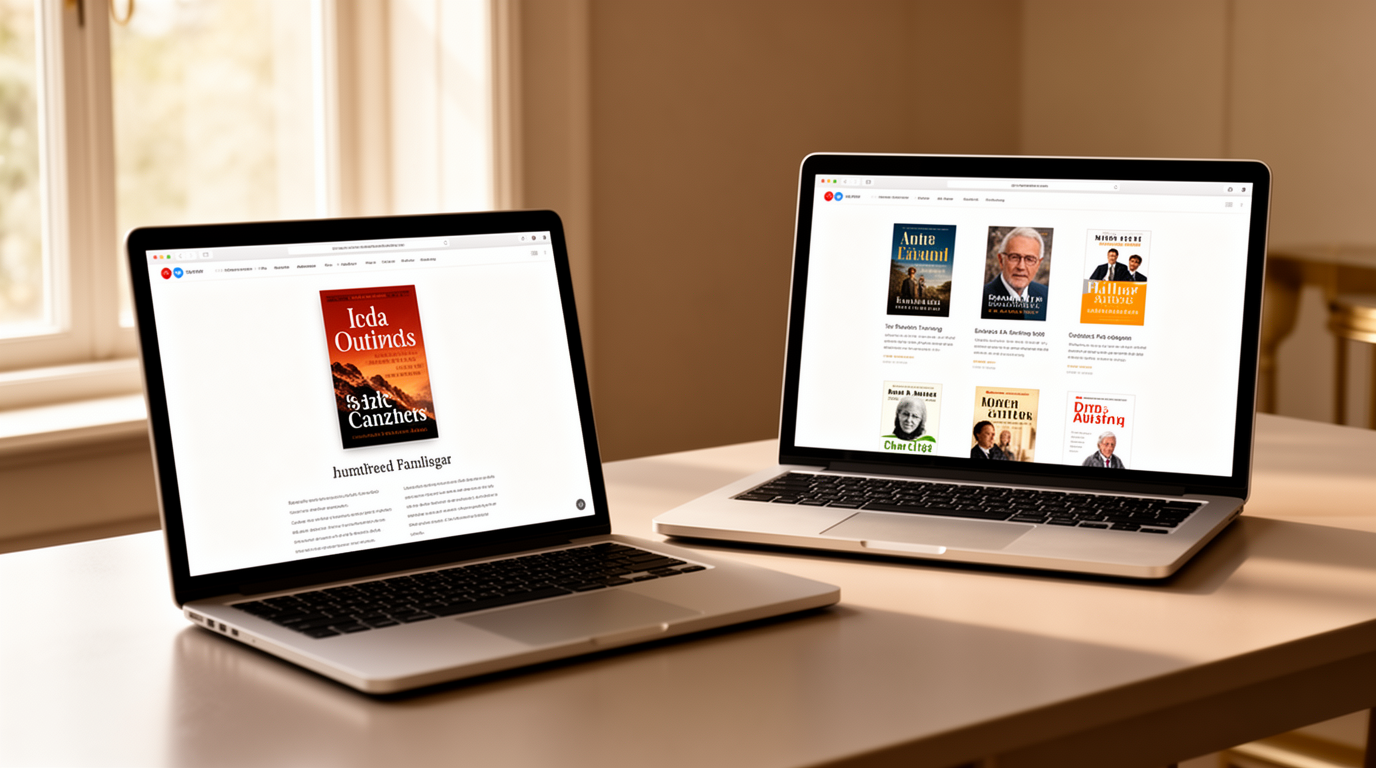
An author website and an Amazon Author Page are both useful, but they do different jobs. An Amazon Author Page helps shoppers understand who wrote the books they are already viewing on Amazon. An author website gives the writer an independent home for their identity, books, media information, reader resources, and future work. If time is limited, the right starting point depends on where readers are discovering you and what you need them to do next.
Most authors should claim and complete their Amazon Author Page quickly because it is a focused, low-friction task. Then they should build a simple author website they control. The website does not need to be elaborate. It needs to answer essential questions clearly, work on phones, and provide a trustworthy path for readers, journalists, event organizers, booksellers, and other people searching for the author.

Author website vs Amazon Author Page: the central difference
The central difference is control. Amazon controls the Author Page, its features, its layout, and how visitors move through the marketplace. That is useful when someone is already considering a purchase there. Your website is an owned destination. You decide the structure, the calls to action, the information you publish, and how the site can evolve as your career changes.
Ownership does not mean a website automatically attracts visitors. It still needs useful content, clear technical foundations, and links from places where readers already encounter you. Likewise, an Author Page does not replace a broader online identity. It is a valuable retailer profile, not a complete communications hub.
What an Amazon Author Page does well
An Amazon Author Page keeps an author’s books and biography close to the shopping decision. A reader who clicks the author name can see related titles and learn more without leaving Amazon. That convenience is its greatest strength. It reduces uncertainty at the point where the reader may already be comparing formats, reviews, descriptions, and prices.
Amazon’s current Author Central guidance says authors can add books, maintain biographies in supported languages, check reviews and sales-rank information, and view follower counts. Available features vary by marketplace, so authors should use the current help page instead of assuming every option appears everywhere.
The Amazon Follow feature may also help eligible followers learn about a new release or preorder, subject to Amazon’s conditions and each customer’s settings. This can support retailer-based discovery, but the author does not control the follower relationship or the notification system. Treat it as a useful platform feature rather than a substitute for an audience you can reach directly with permission.
Where an Amazon Author Page is limited
The page exists inside Amazon’s system. You cannot design a complete reader journey, publish a full media kit, create detailed speaking pages, organize extensive resources, or decide how platform features change. You also cannot assume every person searching your name begins on Amazon. Journalists, librarians, event organizers, podcast hosts, and readers may start with a general search engine.
An Author Page is also tied to retail context. That is exactly what makes it strong near a purchase, but it can make it too narrow for authors whose work includes speaking, teaching, consulting, school visits, rights information, book-club resources, or a growing body of articles. Those needs call for a destination built around the author’s full professional identity.
What an author website does well
A good author website creates one reliable answer to the question, “Where can I learn about this author?” It can present the author biography, books, reading order, purchase options, press information, contact route, appearances, and useful reader resources in a coherent way. It can also support discoverability when pages are well structured and genuinely useful.
The website can serve different visitors without forcing all of them into the same path. A reader may want the next book. A journalist may need an approved biography and image. A book club may want discussion questions. An event organizer may need speaking topics and contact information. Clear navigation lets each person reach the right material quickly.
A website also allows an author to build a permission-based email relationship using an appropriate sign-up process and privacy information. That relationship is still something the author must earn through relevant communication. The important distinction is that it is not entirely dependent on one retailer’s interface or notification rules.
Where an author website is limited
A website requires ongoing responsibility. The domain must remain active, pages need maintenance, contact forms must work, and old event or book information should be corrected. A neglected website can reduce trust more than a simple, current site. Authors should avoid building features they cannot maintain.
A site also does not produce traffic merely because it exists. It needs accurate page titles, useful copy, mobile performance, internal links, and consistent author naming across the web. Promotion, interviews, articles, books, retailer profiles, and social accounts can all help people discover it. Think of the website as the destination and the other channels as possible routes.
Which should you build first?
Claim the Amazon Author Page first when the basics are urgent
If your book is already available on Amazon and your author name does not lead to a complete profile, claim Author Central and connect the correct books. Add a concise biography and a professional image where supported. Check that editions and pen names are handled according to Amazon’s current process. This is usually the fastest way to improve the author context around an active Amazon listing.
This priority is especially sensible when a launch is close and there is not enough time to build a thoughtful website. Completing the retailer profile is a contained task. Do it properly, then plan the independent site instead of rushing an empty or confusing one online.
Build the website first when people need more than a retail profile
A website deserves immediate attention when the author is seeking interviews, events, school visits, bookstore conversations, rights inquiries, direct reader relationships, or visibility for several kinds of work. These visitors need information Amazon was not designed to hold. A focused website can make the author easier to understand and contact.
It is also the stronger first priority when books are sold across several retailers or formats. The site can provide neutral book pages and let readers choose where to buy, without presenting one marketplace as the author’s entire identity.
The practical answer for most authors: use both
This is not a permanent either-or choice. The two destinations work best when their roles are clear. Keep the Amazon Author Page accurate for shoppers. Use the website as the broader source of truth. The biography, author name, book titles, cover images, and important dates should agree across both.
Link responsibly between destinations where the platform permits it. Your website’s book pages can offer descriptive purchase choices. Your books and public profiles can point readers toward a useful author destination. Avoid sending people through unnecessary steps. Every link should help the visitor complete a clear task.
What a credible author website needs
Start with a concise home page that identifies the author, the genre or subject area, and the most useful next action. Add an About page with a reader-friendly biography and a separate short biography for media use if needed. Create one useful page per major book or series rather than crowding every title into a single block.
Include a contact method that protects personal information and sets expectations. If interviews or events matter, provide relevant topics, approved images, book details, and a practical inquiry route. If you collect email addresses, explain what subscribers will receive and handle consent and privacy requirements appropriately.
Use descriptive links instead of vague phrases such as “click here.” Make headings meaningful, compress images, add accurate alternative text, and test every page on a phone. These details help visitors and reduce the appearance of an abandoned or improvised presence.
How to keep both profiles consistent
Choose one standard spelling of the author name and use it consistently unless a genuine pen-name distinction is required. Keep biographies compatible even when their lengths differ. Confirm that book subtitles, series numbers, cover images, and links reflect the current editions. Consistency helps readers recognize the same person across different services.
Set a quarterly reminder to review both destinations and an extra review before every launch. Check new books, retired links, old announcements, contact forms, biography claims, and images. Do not add awards, bestseller labels, endorsements, or affiliations unless they are accurate and can be supported.
How to measure whether each destination is working
Measure the Author Page by the actions Amazon actually reports and by its role in the retail journey. Keep expectations realistic because authors do not receive complete control over marketplace analytics. For the website, watch qualified visits to book pages, media or contact inquiries, newsletter sign-ups where used, and clicks to legitimate purchase options.
Numbers need context. A small number of relevant press inquiries or highly engaged book-page visits may matter more than broad traffic that leaves immediately. Review trends over time and connect them to specific actions, such as a new interview, article, event, or launch. Do not promise yourself that either page will create sales without broader reader interest.
A simple two-stage plan
First, claim or update Author Central. Connect the correct books, complete the biography, review marketplace availability, and confirm the profile displays as expected. Second, publish a small website with a home page, About page, book pages, and contact route. Add more only when readers or professional opportunities create a real need.
Brand My Book can help authors think through searchable identity, book presentation, and the routes that help readers understand an author’s work. The goal is a clear, credible presence, not a collection of profiles that repeat incomplete information.
Frequently asked questions
Is an Amazon Author Page the same as an author website?
No. An Amazon Author Page is a retailer profile inside Amazon. An author website is an independent destination the author controls and can use for books, media information, contact, reader resources, and other professional needs.
Do self-published authors need an author website?
A website is not required to publish, but it can provide a stable, searchable home for the author’s books and professional identity. A simple, current website is usually more useful than a complex site the author cannot maintain.
Is Amazon Author Central free?
Amazon currently allows eligible authors to join Author Central without a fee and claim an Author Page. Authors should check Amazon’s current marketplace support and account requirements before setting it up.
Can an author website sell books directly?
It can support direct sales when the author has suitable ecommerce, payment, tax, shipping, privacy, and customer-service arrangements. Authors can also use neutral book pages that link to verified retailers instead.
What pages should a basic author website include?
A practical starting set is a home page, About page, individual book or series pages, and a contact page. Add media, events, book-club resources, or speaking pages only when they serve a real audience need.
Can an Amazon Author Page help readers find all of an author’s books?
Yes, that is one of its main uses when the correct books and editions are connected. Authors should review the page periodically and follow Amazon’s process to correct missing or incorrect titles.
Should an author website link to Amazon?
It can link to an accurate Amazon book page, but authors who sell through several channels may prefer to give readers descriptive retailer choices. Test every link and avoid implying endorsements or availability that cannot be verified.
How often should authors update their website and Author Page?
Review both at least quarterly and before each launch. Update books, biographies, images, links, contact information, and time-sensitive announcements whenever they change.
Comments