

Book Media Kit vs Author Media Kit: Which Do You Need?

A book media kit and an author media kit solve related problems, but they are not the same package. A book kit helps someone quickly understand and feature a particular title. An author kit helps someone evaluate the person behind the books for interviews, profiles, events, speaking opportunities, and ongoing expert commentary. If you send the wrong package, a good opportunity can stall because the recipient has to hunt for the information they need.
The practical answer is simple: build the kit that matches the opportunity in front of you. Authors promoting one release usually need a book media kit first. Authors pitching podcasts, conferences, workshops, or a long-term platform usually need an author media kit. Many active authors eventually need both, with a shared set of approved assets so their public presentation stays consistent.
Book media kit vs author media kit: the short answer
Choose a book media kit when the central story is the book. A reviewer, bookseller, librarian, blogger, or launch partner needs the cover, synopsis, publication details, buying information, author bio, and usable images. Choose an author media kit when the central story is your expertise, perspective, career, or suitability as a guest. A host or organizer needs your bio, headshots, interview themes, speaking topics, past appearances, contact details, and links that establish context.
The two kits can overlap, but they should not be interchangeable. A thirty-minute podcast about your professional expertise may barely mention one title. A book review editor, by contrast, needs precise information about the edition under consideration. Relevance matters more than the number of files you provide.

What is a book media kit?
A book media kit is a compact source of accurate, reusable material for people who may cover, recommend, stock, discuss, or host activity around a specific book. Its job is to reduce friction. A recipient should be able to understand the premise, confirm essential metadata, download an approved cover, find a suitable author bio, and contact the right person without exchanging several emails.
The strongest kits are selective. They do not contain every draft description, every review, or a folder of dozens of photographs. They contain the current, approved version of each asset. That discipline helps prevent an outdated subtitle, an old headshot, or an unsupported claim from appearing in coverage.
What belongs in a book media kit?
Start with a one-page overview that includes the title, subtitle, author name, genre or subject, publication date, formats, ISBNs where applicable, and a concise description. Add a high-resolution front cover, a web-ready cover, a short and medium author bio, one or two approved headshots, a longer synopsis when spoilers are acceptable, and clear contact information.
Useful optional assets include a sample chapter, discussion questions, a fact sheet, an excerpt cleared for quotation, and links to the official book page and retailer listings. If you include praise, awards, sales figures, or media logos, every claim must be current, verifiable, and used with permission. A media kit is a credibility tool, so uncertain evidence weakens it.
What is an author media kit?
An author media kit presents the author as a credible, prepared contributor. It answers a different set of questions: Who is this person? What can they discuss? Why would an audience care? What kind of interview, article, workshop, or talk can they deliver? How should the host introduce them?
This kit becomes increasingly important when an author's platform extends beyond a single launch. A nonfiction author may speak about a field of expertise. A novelist may discuss craft, research, setting, genre, or the themes connecting several books. The kit should make those angles clear without forcing the recipient to reverse-engineer them from a long biography.
What belongs in an author media kit?
Include a short, medium, and full biography; several current headshots with photographer credits when required; a pronunciation guide for the author's name if useful; approved social and website links; contact information; and a concise list of interview themes. Add speaking topics or workshop descriptions only when the author genuinely offers them.
You can also include selected previous appearances, article links, or audience information when it is verifiable and relevant. Do not create the impression of endorsements, partnerships, awards, or professional experience that do not exist. A smaller truthful portfolio is more persuasive than an inflated one.
Which kit should you build first?
Start from the next real opportunity, not from a generic publicity checklist. If you are preparing reviewer outreach, bookstore conversations, library programming around one title, or a launch campaign, build the book kit first. If you are actively pitching podcast interviews, guest articles, conferences, panels, coaching, or expert commentary, build the author kit first.
If both types of outreach are active, create a shared asset library and two concise landing pages or downloads. Reuse the same approved bio, portraits, contact information, and brand elements, but change the lead message and supporting material. This keeps the packages aligned while respecting the recipient's purpose.
Match the kit to the opportunity
Reviewers, bloggers, and book-focused media
Lead with the book kit. These recipients generally need a clear description, edition details, cover image, author context, and access information. Make any review-copy process explicit. Avoid burying the book's premise under a long account of the author's career.
Podcasts and interviews
Lead with the author kit, then link the relevant book as supporting context. Hosts often plan conversations around questions, themes, and audience value. Give them three to five specific interview angles rather than a vague statement that you can discuss your book.
Bookstores and libraries
Use the book kit, but consider adding a separate sell sheet or event sheet. Staff need practical facts such as format, ISBN, price, distribution path, returnability information when verified, audience, and proposed event format. Do not treat a publicity kit as a substitute for the operational details a buyer or programmer needs.
Speaking and professional opportunities
Use the author kit. Organizers need session titles, learning outcomes, audience fit, delivery format, and a biography suitable for an introduction. Only list talks you are prepared to deliver. If a book supports the topic, show how it adds value without turning the entire proposal into a sales pitch.
Build a shared core without creating clutter
Maintain one controlled source for facts used in both kits: preferred name and title, biography, headshots, website, contact details, book metadata, and approved claims. Give files plain, descriptive names and include the month or version where updates are common. A recipient should not have to choose between files called final, final-new, and final-revised.
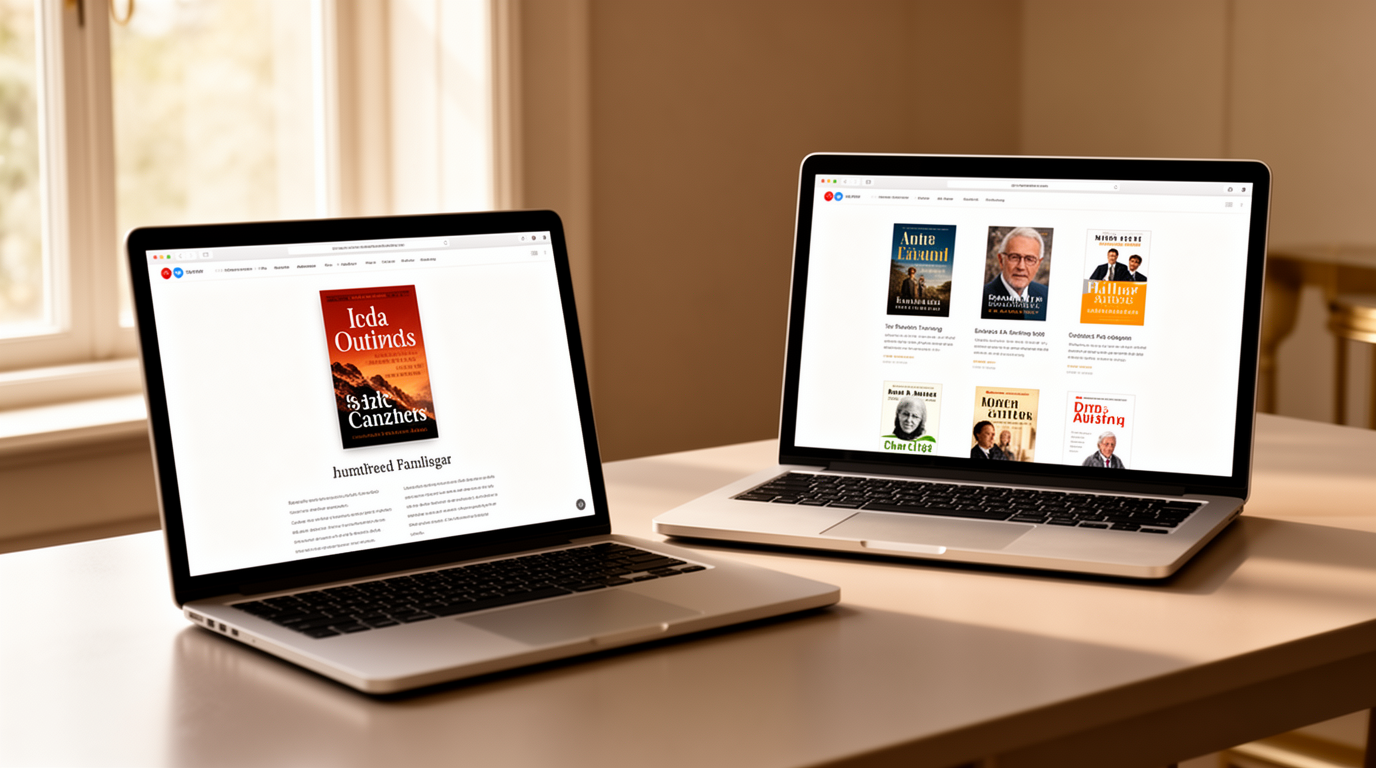
Keep large image files available for download, but present the page itself for quick scanning. A clean web page often works better as the front door because it can be updated without resending a PDF. A concise PDF can still be useful for internal circulation or event planning. If you offer both, make sure they say the same thing.
Common media kit mistakes
The most common mistake is treating a kit as an archive. Too many assets transfer the sorting work to the recipient. Another mistake is using one generic pitch for every contact. A kit supports outreach; it does not replace a tailored message explaining why the book or author fits that outlet.
Other problems include missing contact details, low-resolution images, biographies that are too long for introductions, unsupported superlatives, broken links, old publication data, and filenames that reveal internal confusion. Review the package from a stranger's perspective: can someone find the right facts in under a minute?
How to organize the files and page
Use a simple structure: overview, downloadable assets, book information or author topics, selected proof, and contact. Put the most requested items near the top. On a book page, that usually means cover, description, metadata, and author bio. On an author page, it usually means biography, headshots, interview topics, and booking contact.
Offer images in clearly labelled print and web versions. State image credits beside the download when needed. Link to the canonical book or author page instead of duplicating long background material. Test every file in a private browser window so you know recipients do not need special permissions.
How to judge whether your kit is working
A media kit succeeds when it shortens the path from interest to action. Track practical signals: fewer follow-up requests for basic assets, more complete event listings, accurate biographies in coverage, downloads from the kit page, replies to targeted outreach, and qualified interview or event conversations.
Do not judge the kit by page views alone. A small number of visits from reviewers, producers, booksellers, librarians, or organizers may be more valuable than broad, unfocused traffic. Add campaign tracking to important outreach links when appropriate, and ask new contacts how they found you.
A simple decision framework
Before sending anything, answer four questions. First, is the opportunity primarily about one book or about the author? Second, what decision must the recipient make? Third, which facts and assets support that decision? Fourth, what single next step should the recipient take?
If the answers point to a title, send the book kit. If they point to expertise, personality, or a continuing platform, send the author kit. If the opportunity genuinely spans both, lead with the more relevant page and provide one clear link to the other. Avoid attaching two large packages without explanation.
The bottom line
The book media kit vs author media kit decision is not about choosing one forever. It is about presenting the right evidence for the right conversation. A focused book kit helps a particular title get understood and used. A focused author kit helps the person behind the work get evaluated for broader opportunities. Build the most urgent one first, keep a shared core of approved assets, and expand only when your outreach requires it.
Frequently asked questions
What is a book media kit?
A book media kit is a collection of approved facts and downloadable assets that helps reviewers, booksellers, librarians, bloggers, and other contacts understand and feature a specific book.
What is an author media kit?
An author media kit presents the author for interviews, profiles, events, speaking, guest articles, and other opportunities centred on the person's expertise, perspective, or career.
Do authors need both a book media kit and an author media kit?
Not always. Build the kit that supports your next real opportunity. Authors promoting individual titles while also pursuing interviews or speaking opportunities often benefit from having both.
What files should be in a book media kit?
Include accurate book metadata, a concise description, high-resolution and web-ready covers, short and medium author bios, approved headshots, contact details, and any relevant excerpts or discussion material.
What belongs in an author media kit?
Include approved biographies, current headshots, interview themes, speaking or workshop topics you genuinely offer, selected verified appearances, official links, and clear contact information.
Should a media kit be a webpage or a PDF?
A webpage is easy to update and scan, while a PDF is convenient to circulate. Many authors use a webpage as the main source and offer a concise matching PDF for download.
How often should authors update a media kit?
Review it before every campaign and whenever a book edition, biography, headshot, contact detail, appearance, or approved claim changes. Test the links and downloads at the same time.
Can authors include reviews and awards in a media kit?
Yes, when the reviews, awards, quotations, and logos are accurate, current, relevant, and used with permission. Do not include uncertain or exaggerated credibility claims.
Comments