
Book Trailer vs Author Interview: Which Builds More Interest?

A book trailer and an author interview can both introduce a book, but they create interest in different ways. A trailer sells mood, premise, and visual identity in a compact format. An interview gives readers time to understand the author’s thinking, experience, research, or creative choices. The better investment depends on the book, audience, campaign goal, distribution plan, and the material you can produce convincingly.
Neither format works simply because it exists. A polished trailer with no distribution plan may receive little attention. A long interview without a clear angle may lose viewers or listeners. Authors should decide where the content will appear, who will care, and what action should follow before spending time or money.
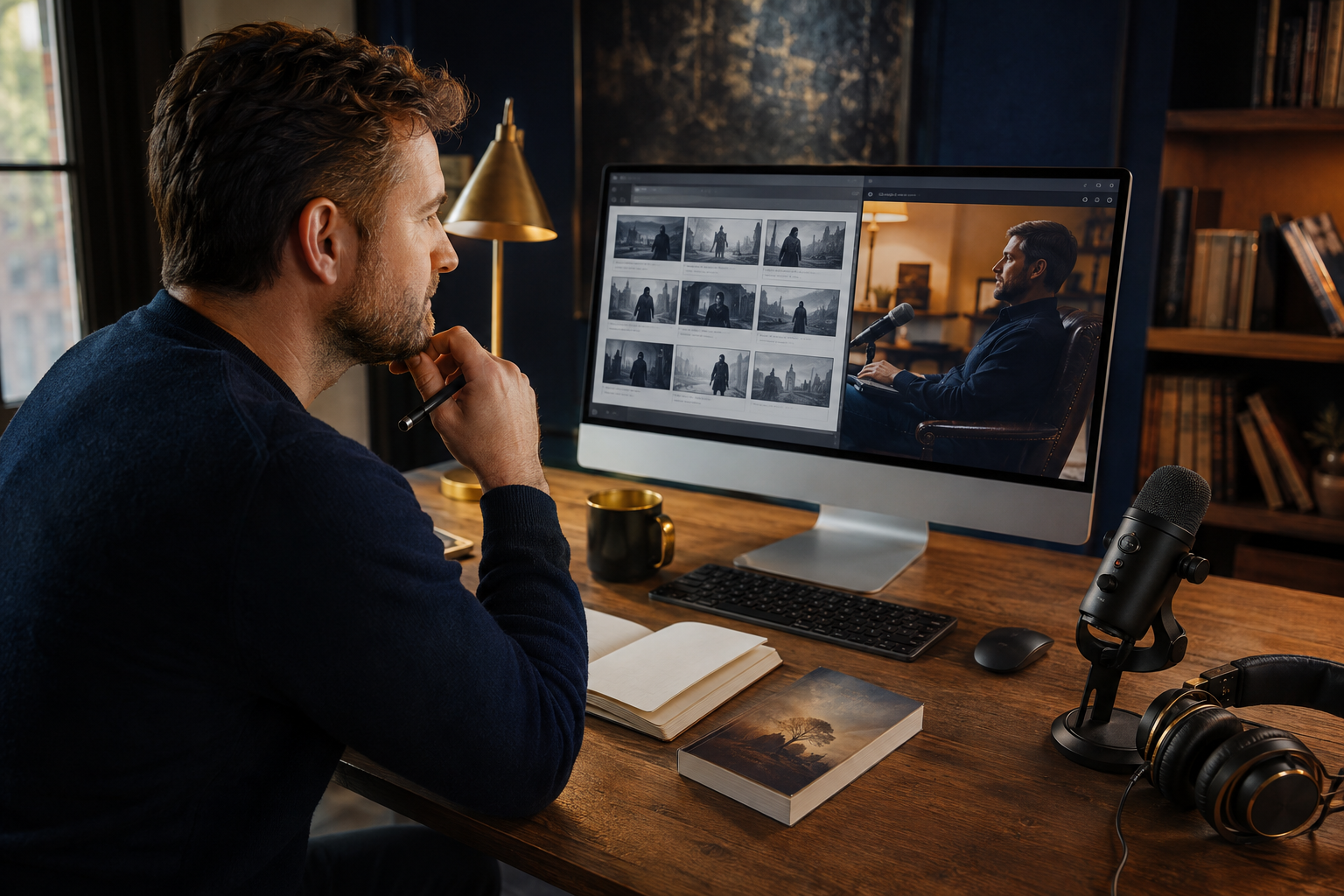
Book trailer vs author interview: the core difference
A book trailer is controlled promotional creative. The author or production team decides the script, images, pacing, music, length, and call to action. It can communicate genre quickly and may be adapted into short clips. Its strength is emotional compression.
An author interview is conversational authority. Questions create context that a standard advertisement may not provide. The audience hears how the author explains the book and can judge the person behind it. Its strength is depth, credibility, and the possibility of discovery through the interviewer’s existing audience.
When a book trailer can be worth the stronger choice
A trailer is useful when the book has a clear visual world, a strong hook, or a tone that can be communicated without summarizing the entire plot. Thrillers, fantasy, romance, historical fiction, children’s books, and visually distinctive nonfiction may all provide useful creative material. The trailer should promise the reading experience rather than imitate a full film.
Trailers also suit campaigns that need flexible visual assets. A main version can support a website or event, while shorter edits may fit social posts. This only works when every version remains readable, properly licensed, and understandable without sound where the placement demands it.
The trailer should lead to one relevant destination. That might be a verified book page, an event page, or a neutral landing page with legitimate retailer choices. A vague closing screen or several competing actions weakens the result.
The limitations of a book trailer
Production quality matters because viewers notice mismatched stock footage, hard-to-read typography, synthetic voices, abrupt pacing, or music that does not fit the genre. A modest concept executed consistently is often more credible than an ambitious concept that looks unfinished.
Rights are another practical concern. Images, footage, fonts, music, narration, quotes, and cover art must be used lawfully. Paying someone to edit a video does not automatically transfer every required right. Authors should keep records of licenses and confirm where the finished content may be used.
A trailer is also easy to overvalue. Views do not prove that people became readers. Track clicks to the next step and compare performance with other campaign materials. If the audience watches but never investigates the book, the creative may be entertaining without being persuasive.
When an author interview can be the stronger choice
An interview works well when the author has a meaningful story, specialized knowledge, unusual research, a timely theme, or a perspective that helps an audience understand the book. Nonfiction authors can explain the problem they address. Fiction authors can discuss craft, setting, themes, or the experience that shaped the work without giving away the plot.
The interviewer’s audience and format matter more than prestige alone. A small podcast, newsletter, video channel, library program, or community publication may be valuable when its audience closely matches the book. Relevance and trust can outweigh a large but unfocused reach.
Interviews can also create reusable material. With permission, an author may be able to share a link, approved excerpt, short clip, transcript, or quotation. Usage rights should be agreed in advance. Do not assume that appearing in an interview gives unrestricted ownership of the recording.
The limitations of author interviews
An interview gives up some control. Questions may change, the conversation may take an unexpected direction, and editing decisions belong to the host unless agreed otherwise. Authors need preparation without sounding memorized. Clear answers and useful examples matter more than repeating sales language.
Availability is not the same as suitability. A host may have little connection to the book’s readers, irregular publishing, or weak production. Research recent episodes, guest treatment, audience topics, and the normal promotional expectations before agreeing.
Interviews also require a real angle. “I wrote a book” is rarely enough. A useful pitch explains why the conversation matters to that specific audience now. It should offer insight rather than demand free publicity.
Compare both options by five decision factors
1. Campaign goal
Choose a trailer when you need a concise emotional introduction, launch visual, or adaptable creative asset. Choose an interview when you need explanation, authority, trust, or access to a host’s relevant audience. If the goal is direct sales, both still require a strong book page and trackable next step.
2. Audience behaviour
Consider where the intended readers already spend attention. Some audiences respond to short visual discovery. Others prefer long-form podcasts, written Q&As, live conversations, or educational video. Use evidence from your own channels instead of copying another author’s format.
3. Budget and time
A trailer may require scripting, editing, licensed assets, captions, narration, and several formats. An interview may cost less to produce but requires research, pitching, scheduling, preparation, and follow-up. Include the author’s time in both estimates.
4. Control and credibility
The trailer gives greater control over the message. The interview may offer stronger third-party context because another person asks questions and presents the conversation. Neither automatically creates credibility. Accuracy, relevance, production care, and honest positioning do.
5. Reusability
Ask how many useful assets the project can create without becoming repetitive. A trailer can produce short visual cuts. An interview can produce approved clips, quotations, summaries, or related articles when rights allow. Plan reuse before production so framing and recording quality support it.
How to plan a book trailer that earns attention
Write a one-sentence promise for the reader, then build the trailer around it. Avoid explaining every character or chapter. Use a simple structure: establish the situation, introduce the tension or benefit, and end with the book and next action.
Design for the smallest important screen. Keep any necessary text brief, readable, and on screen long enough. Add accurate captions when speech is used. Test with and without sound. Confirm that cover artwork and purchase information match the current edition.
Create a distribution checklist before the final edit. Identify the website page, newsletter, event, social placements, media kit, or advertising use. Each channel may require a different duration or aspect ratio, so one exported file may not serve every placement.
How to prepare for an author interview
Study the host’s recent work and audience. Prepare three useful ideas you can explain with specific examples. Create short versions of the author biography and book description, but do not turn every answer into a pitch.
Confirm the format, length, recording method, live or edited status, publication timing, and promotional expectations. Ask whether the host needs a cover image, headshot, biography, book link, or talking points. Provide accurate files through an organized media page or folder.
Practice answers to predictable questions, including what the book is about, who it is for, why you wrote it, and what readers may take from it. Also prepare boundaries for personal, political, medical, legal, or other topics you do not want to discuss beyond your expertise.
Which option is better for a new author?
An interview may be the better early choice when the author can offer genuine insight and identify relevant small outlets. It can build communication skill and create relationships without a large production budget. A trailer may be better when the book’s visual concept is strong and the author already has clear places to distribute it.
Do not buy an expensive trailer to compensate for unclear positioning, and do not accept every interview simply to collect appearances. Start with the format you can execute well and connect to a measurable reader path.
Can authors use both?
Yes. A short trailer can open a campaign, while interviews provide the deeper story behind the book. Clips from separate, properly licensed material can support different moments. The formats should complement each other rather than repeat the same script.
A sensible sequence is to clarify the book’s promise, prepare the sales page and media materials, choose the strongest primary format, and test distribution. Add the second format only when it has a distinct job.
Brand My Book helps authors connect book presentation, discoverability, and credible publicity choices. The aim is not to produce content for its own sake. It is to give the right audience a clear reason to understand and explore the book.
Frequently asked questions
Are book trailers worth it for self-published authors?
They can be worthwhile when the book has a strong visual promise, the production is credible, and the author has a clear distribution plan. A trailer without a relevant audience or next step is unlikely to justify its cost.
How long should a book trailer be?
Use the shortest length that communicates the book’s promise clearly. The right duration depends on the placement, so authors may need a main version and shorter edits rather than one file for every channel.
Do author interviews help sell books?
They can help relevant audiences understand the author and book, but sales are not guaranteed. Audience fit, interview quality, book-page conversion, timing, and the call to action all affect results.
Should authors pay for interviews?
Some legitimate outlets offer disclosed sponsored opportunities, while many editorial interviews are unpaid. Evaluate audience fit, deliverables, disclosure, usage rights, and editorial expectations before paying.
What should an author talk about in an interview?
Focus on ideas useful to the host’s audience: the book’s themes, research, craft, problem, or origin. Prepare specific examples and concise book information without turning every answer into an advertisement.
Can an author reuse an interview recording?
Only with permission from the rights holder and according to the agreed terms. Confirm whether you may share the full recording, clips, transcript, quotations, images, or audio before republishing anything.
Does a book trailer need professional production?
It needs coherent production, lawful assets, readable text, suitable sound, and a clear concept. Professional help may improve execution, but a focused modest trailer can be stronger than an elaborate unfinished one.
Which is better for nonfiction, a trailer or an interview?
An interview often suits nonfiction because it gives the author room to explain expertise and useful ideas. A trailer can still work when the subject has a clear visual concept and a concise reader benefit.


Comments