
Library Catalog Record vs Retail Product Page: Why Does Book Metadata Look Different?

An author may find a precise library catalog record for a book and a simplified or inconsistent retail product page for the same edition. That difference does not automatically mean one record is wrong. Libraries and retailers use metadata for different jobs, select different fields, and may receive information through different supply chains.
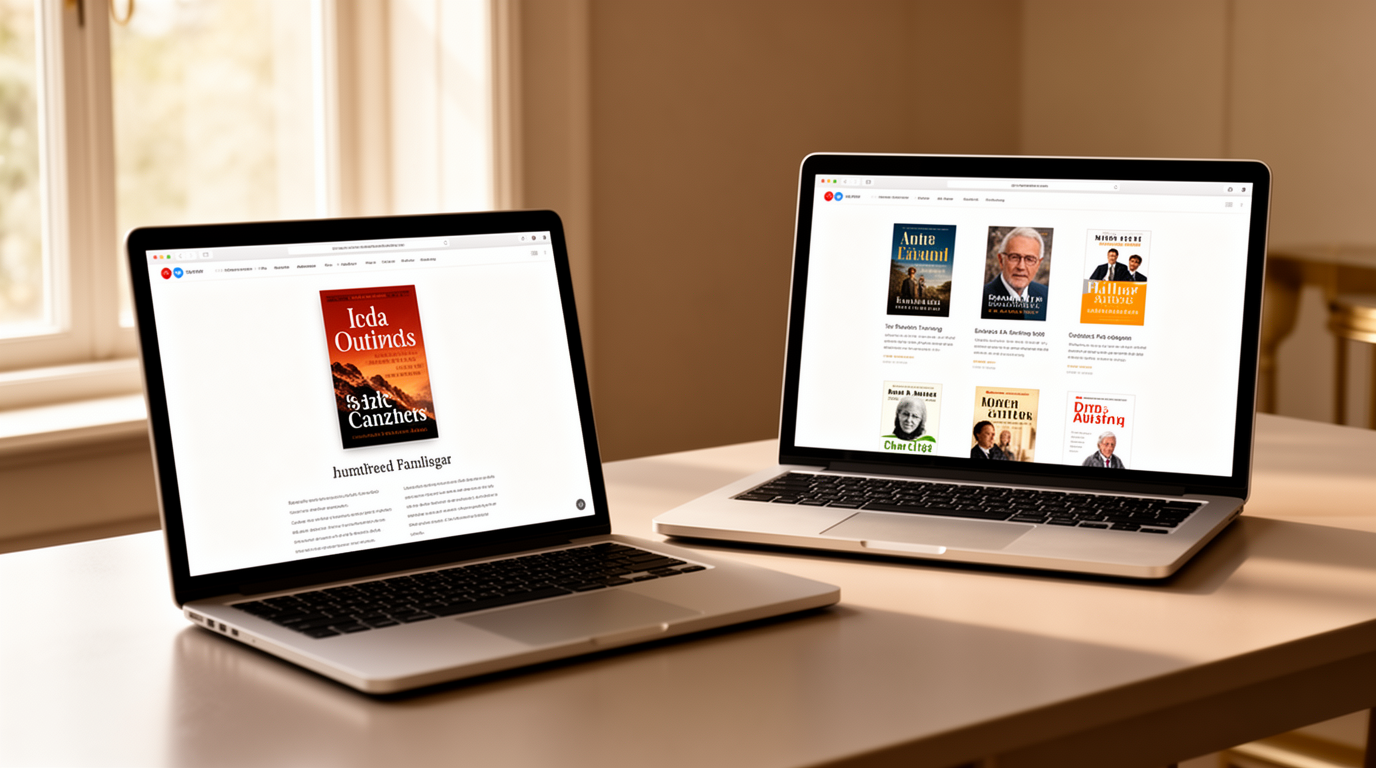
A catalog record is designed to identify, describe, relate, and retrieve an item within a library environment. A retail page is designed to help a customer evaluate and buy a product. Both may begin with shared facts such as title, contributor, publisher, format, and ISBN, yet they can present those facts very differently.

What a library catalog record is built to do
Library records support discovery, identification, circulation, and collection management. They may include authorized names, subject headings, physical description, edition statements, notes, identifiers, language information, and relationships to other works or formats.
Libraries often create or import structured bibliographic data and then apply local policies. A public catalog displays only part of that underlying record. The wording and order may appear formal because consistency matters across large collections.
A library can also enrich or correct a record independently. That local work does not necessarily flow back to every retailer or distributor.
What a retail product page is built to do
A retail page emphasizes customer decisions: cover, price, availability, format, description, reviews, delivery, and purchasing options. It may suppress technical fields that are useful to cataloguers but distracting to shoppers.
Retailers can combine publisher data, distributor feeds, customer activity, proprietary categories, and internal merchandising rules. The visible page is therefore a presentation layer, not a complete copy of the publisher’s master metadata.
Different retailers may refresh at different speeds. A correction at the source can appear on one site before another without proving that the slower site has rejected it.
Why the same ISBN can display differently
The ISBN identifies an edition or product, but it does not force every database to display identical text. Each organization decides which incoming fields to store, map, normalize, abbreviate, or show.
Contributor names may be reordered, subtitles shortened, descriptions reformatted, and subjects mapped into local categories. A library may retain a formal edition statement while a retailer highlights format and selling copy.
The right diagnostic question is not merely which page looks better. Ask where the disputed fact originated and which organization has authority to change it.
Source metadata versus local enrichment
Publisher and distributor records are common upstream sources for retail pages. Library records may originate from cataloguing agencies, vendors, shared databases, or local cataloguers. Both environments can add local data.
If the publisher name, ISBN, format, or publication date is wrong across several retail sites, inspect the upstream metadata feed. If only one retailer is wrong, use that retailer’s correction process after confirming the source.
If a library record contains a local subject or note, ask the library respectfully rather than assuming the distributor can overwrite it.
What authors should compare first
Match the exact ISBN and format before comparing pages. Hardcover, paperback, ebook, audiobook, revised edition, and large-print records can legitimately differ.
Then compare stable identity fields: title, subtitle, contributors, edition, publisher or imprint, publication date, language, format, and identifiers. After those, examine descriptions, subjects, keywords, and merchandising.
A useful companion is ISBN Metadata vs Retailer Description: What Should Authors Fix First?, which separates authoritative source fields from customer-facing copy.
How to request a correction
Capture the URL, incorrect field, correct value, supporting source, ISBN, and edition. Send a narrow correction request instead of asking for a complete rewrite.
Allow for propagation time and recheck the same edition. Repeated changes from multiple suppliers can create a loop in which corrected data is overwritten by an older feed.
Keep a dated master record so every distributor, library contact, and retailer receives the same verified facts.
A practical workflow
Confirm that both pages refer to the same ISBN, format, and edition.
Identify whether the difference concerns identity, description, subject, availability, or merchandising.
Check the publisher or distributor master record for the authoritative value.
Determine whether the visible difference is a local library or retailer choice.
Submit one documented correction through the organization that controls the field.
Recheck after the normal update cycle and record the result.
Separate the content of the metadata from the way a platform presents it. That prevents an author from trying to fix a local display choice through an unrelated upstream supplier.
The bottom line
Library catalog records and retail product pages are different views built for different users. Correct shared factual errors at the authoritative source, but use local correction channels for local cataloguing or retail presentation decisions.
If your book information is inconsistent across channels, review Brand My Book’s services to see whether the available support fits the specific problem you need to solve.
Frequently asked questions
Why does my library record look different from my retail page?
Libraries and retailers use metadata for different purposes, choose different visible fields, and may receive or enrich records through different systems.
Does the ISBN make every book record identical?
No. An ISBN identifies a specific product or edition, but each database controls how it stores, maps, and displays the associated metadata.
Which record is authoritative for my book title?
The publisher or designated metadata supplier should maintain the authoritative title for that edition. A library or retailer may still apply local display conventions.
Can a distributor change a library’s local catalog record?
Usually not directly. Libraries may import vendor data and then make local cataloguing decisions. Contact the library for a local correction.
Why is an old description still showing at one retailer?
Retailers refresh feeds on different schedules and may retain local content. Confirm the upstream record, then use the retailer’s correction process if the problem persists.
Should an ebook and paperback have the same catalog record?
They represent different formats and normally have distinct product records and ISBNs where ISBNs are assigned. Some discovery systems may link them as related editions.
What evidence should I send with a correction request?
Provide the exact ISBN and edition, the incorrect field, the correct value, the page URL, and a reliable source such as the publisher’s metadata record.
Can a better library record improve retail sales?
A correct library record improves library discovery and identification, but it does not automatically update retail pages or guarantee sales.
Comments